"I cannot live without books." -- Thomas Jefferson

Tuesday, October 18, 2011

Shiro Hamao's "The Devil's Disciple"

"eroguro-nansensu" or as they say in English "erotic grotesque nonesense" was a school of writing in 1920's Japan. Decadent, druggy, kinky, and...fun. The most famous writer in that movement without a leader was Edogawa Rampo (yes it is a play on the name Edgar Allen Poe) and Shiro Hamao. Hamao was a lawyer by trade from a very well connected family. He threw that life away to become a crime writer, and an early supporter of gay rights in Japan. Died young, yet a dandy, Hamao had it all. And we can be thankful for Hesperus publishing these two short novels "The Devil's Disciple" and "Did He Kill Him?" 
Both stories are pretty pulpy, but it drips with Asakusa 1920's life, and both have a gay sensual quality. Imagine Cocteau writing a gay noir detective story - and that is pretty much what is here. So yeah, not a masterpiece, but nevertheless a fascinating writer in a fascinating country in a very exciting series of moments. 
Both stories deal with seduction that leads to a crime - and no regrets! One can only hope shortly that there will be more Shiro Hamao stories in English.

Friday, October 14, 2011

Ry Cooder's "Los Angeles Stories"


The stars are lined up perfectly for musicians who write books.  Some of my favorite books are by rock n' roll people i.e. Patti Smith's "Just kids," and Nick Cave's novels.   And now we have a superb collection of short stories by guitarist/songwriter Ry Cooder that deals with Los Angeles from 1940 to the mid-50's and its brilliant.  What you get is a series of snapshots of life in different neighborhoods of Los Angeles, and some of these places don't exist anymore - but yet they live via Cooder's writing.  After reading this book I wanted to rush off and locate volumes on Los Angeles history and its tall tales.
All narratives are strong, and very Noir in its approach and the way it looks at urban life.  Money is tight, the fear of communism is in the air, and more bad times are just around the corner - yet the eccentricity of the characters are incredibly endearing - even though they're very low-level criminal types or even murderers.  Nevertheless "Los Angeles Stories" is a classic of urban history research and fiction.   After each story and while reading them, I was consistently googling to see if they actually exist or not.  Some do and some don't and that's all part of the fun.   Essential!

Tuesday, September 13, 2011

Simon Reynolds' "Retromania"


I think "Retromania" is the best music book of the 21st Century so far.  But of course I am not including the great rock n' roll memoirs, but just talking about "music books" as a cultural thing.  And this is a very important book to me, with respect to how music fans react to pop in general.  If you are like me, a long term fan of pop music and its trends,  and you are middle-aged, one thing comes to mind.  There is nothing new happening in contemporary music.  In fact its a shocking fact.  If i get a buzz on something that's out there, more likely it came from the distant past - the 60's or 50's even.

Simon Reynolds doesn't have an answer for all of this, but he is the first writer of my generation to comment on how pop is just plain old.  And old is not really bad, but...its still old!  Reynolds even goes beyond music and into fashion as well.  His knowledge of pop culture is right on the dot, with respect to him focusing on various trends and readings on contemporary culture.  I also find his writings on the download culture fascinating.  And if you are a music fan, one can imagine that one is busy downloading as fast as they can, but more likely not hearing everything.  So therefore we're hording music instead of enjoying and thinking about music.  And is this a good thing?  Most say no, but habits are hard to break.

What i do know is that the shock of the new probably won't happen to me in my life time.  I remember certain records giving me that 'wow.  The Yardbirds double A single of "I'm a Man' and "Still I'm Sad."  The first Roxy Music album.  And the Kinks "Village Green Preservation Society."  The first listening of those records put me into the 'now.'   And that is what's missing in my listening life right now - the 'now' factor.

Friday, September 9, 2011

"Like a Sniper Lining Up His Shot" by Jacques Tardi and Jean-Patrick Manchette

Superb.  Jacques Tardi adopted "The Prone Gunman" by Jean-Patrick Manchette and its splendid.  Without a doubt Manchette is my discovery of a new(ish) noir writer - and his stuff is pretty bleak, in a very French style of course.  Nevertheless the narrative is about a trained assassin who wants to quit his work, but alas can't.  He has a thing for Maria Callas and a tender heart - that is hidden from everyone, including himself.  But make no mistake he's a murderer. Tardi's illustrations are pretty perfect, and visually he tales the tale.  This is the second release in English of this dynamic dual.  One hopes that there are other titles lurking ahead or in one's drawer someplace in the latin Quarter.

Sunday, September 4, 2011

Enrique Vila-Matas' "Never Any End To Paris"


A wonderful fine for me.  And to think of it, I only picked this book up because it had Paris in its title, and its published by New Directions.  Such a beautiful start, and the end is just as wonderful.   Enrique Vila-Matas' novel "Never Any End to Paris"  is for me a mediative and hysterical look at a writer and the writing Parisian writing world, that exists in real life, but also in one's imagination.
It reads like a memoir, and for all I know it is a memoir, but alas, one can see this as almost an early Jean-Luc Godard film.  Zillion of quotes, and literary & film references a go-go.  And that is part of he fun of this novel.
The main character is an obsessed Hemingway fan who may or may not be a talented writer.  And that in the end is not that important, what's the deal is the life one imagines.  Everyone from Boris Vian to Guy Debord come through these pages, and one can write an endless amount of footnotes if that was the need.  But alas, its a trip to a romantic notion of a writer drifting through Paris 20th century literary life.  It was sad to see this novel ending...

Saturday, September 3, 2011

"People" by Blexbolex

The cover of "People' drove me to this book. At first it looks like a great kids book - and technically it is, but alas, there is something being said here that is not obvious. Typically Blexbolex draws an image of a music "conductor" but then on the opposite page, with the same held baton he draws a "tyrant." So one" starts to make comparisons between the two pages. Another example is an illustration "party goers" and the opposite page is "hermit." And so forth.

There is something very Jacques Tati about it all. It maybe due to the retro look of the book, but also the commentary on the images where one thinks there would be no commentary. "People" serves many purposes. It can be an excellent book for a second language reader, or for those who need graphic design ideas, or..... there is the textural meaning what it means to be labeled and filed in a specific manner and form. Blexbolex is working on many levels here and this is an excellent book.

Thursday, August 25, 2011

McKenzie Wark's "The Beach Beneath The Street"

Without a doubt one of the better books out there on the Situationist International. And come to think of it maybe the best overall history of the movement that wasn't really a movement at all. McKenzie Wark breaks down all the main characters in this world - and tells exactly what they contribute to the literature or the series of actions that makes up Guy Debord and his world. And speaking of Debord there are a lot of others who contribute to this living critique of our world. 

I am also happy that there is great mention of Boris Vian and even my Dad shows up on these pages. Especially the fascinating chapter on the Scottish writer and the man who was always in the right place, right time and even more important - the right people, Alexander Trocchi. This is very much an essential guide to the Situationists and all the by-products of their culture that came before and even after. And the cover turned poster - is a must as well!

Saturday, August 13, 2011

Jake Arnott's "Johnny Come Home"

At last! The first 70's glam rock novel. And by the wonderful London observer and stickler to details - Jake Arnott. Like Arnott's great London 60's crime novel "The Long Firm," "Johnny Come Home" takes an intense look into the music scene of London's glitter era. Johnny, is sort of based on Gary Glitter - but I don't think it is actually him, just image wise. But the narrative deals with a gay couple involved in radical politics as well as a woman who is in that world as well as getting involved with a glam-struck rent boy, who is basically supported by the Gary Glitter character.

The novel is pulpy, but it is also a great snapshot of London culture and Arnott has a great feel for that time and the Capital's damaged citizens. Essential rock n' roll read.

Tuesday, August 2, 2011

Arthur Rimbaud's "Illuminations" (translated by John Ashbery)

I think what's amazing here is that a magnificent American Poet John Ashbery at the age 83 (or something like that) translated the great poetry of Arthur Rimbaud, whose poems were written when he was in his teens. The ultimate teenage rebel icon touched by the grand poet of American letters, whose work is still controversial and has a bite. One wonders what took so long? 
The truth is in this book, well, kind of. Rimbaud will always be this cloud that floats above us. It is there to be captured and read, but can one ever own the feverish imagery of his poems? Rimbaud's work is in Ashbery's DNA by now. 'Illuminations' is one of those perfect books or even moments, and Ashbery captures the essence and flavor of Rimbaud's vision and words. Mega-important!

Sunday, July 24, 2011

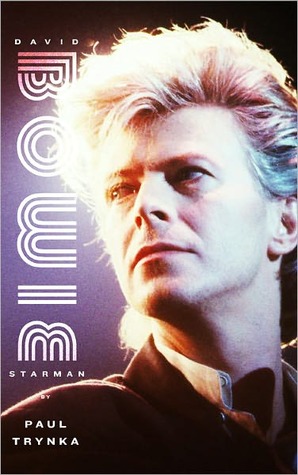
"David Bowie: Starman" by Paul Trynka

Two words, David Bowie. And its two words that i say to myself for the past 40 years or so. I wouldn't say I was obsessive about the man and his work, but for sure a fan. And I don't think he's a genius. I think he is a highly motivated hard worker who had to study his craft to become what he had become. Which, of course, is a great pop star - and an incredible singer. But also a wow gee songwriter. In other words he has the whole package. 
The theater world, the black american music world, the gay world, and of course the pure showbiz of it all that is one thing that separates Bowie from other rock artists - his love and respect for showbiz. He may grown to hate it, but he will never deny its special power over himself and his audience. 
My favorite part of the Bowie story is his young years trying to break into the pop music world. And he tried for at least 12 years before the Ziggy Stardust thing happened. No overnight success story here, but just a lot of hard work and hustling. And speaking of hustling, this bio really shines on the gay British pop music world of the early 60's. Bowie knew who was spreading the butter - and he played up to the expectations of that world. 
There are a lot of good books on Bowie and there will be more. But this is an exceptionally good biography on the man, and one still after reading it, wants to know more. And that is why he's a star.